The dog training tips that work are simple. Reward the behavior you want right after it happens, keep sessions short, use the same cue every time, and practice in more places as your dog improves. Shelters, veterinary behaviorists and animal welfare groups all point to this approach. The rest of this article shows how to apply it to sit, down, stay, come and loose-leash walking.
Key Takeaways
- Reward immediately. MSPCA-Angell (the Massachusetts SPCA) says to deliver the reward right after the behavior. Food usually works best, and praise alone often isn’t enough.
- Keep sessions short. MSPCA-Angell recommends staying under five minutes. The RSPCA, the UK animal welfare charity, says brief and frequent. Several tiny sessions beat one long one.
- Use reward-based methods only. The American Veterinary Society of Animal Behavior recommends reward-based training for all dogs.
- Build difficulty in stages. Teach in a quiet room, add distance and distractions slowly, then move to new places.
- Get help early for aggression, intense fear, or training that has stalled despite regular practice.
Use Reward-Based Dog Training
Reward-based training means that when your dog does something you like, you give them something they want straight away. They learn that the behavior pays off, so they offer it more often. The RSPCA states that all training should be reward based, using treats, toys or praise that the dog enjoys.
What the research says about reward-based methods
The American Veterinary Society of Animal Behavior (AVSAB) published a position statement in 2021 recommending that only reward-based methods be used for all dog training, including behavior problems. It advises against using aversive methods.
A 2020 observational study in PLOS ONE points the same way. It can’t prove cause, because the dogs weren’t randomly assigned to schools, but the pattern is consistent. Researchers watched 92 companion dogs from seven training schools in Portugal. The schools used reward-based, mixed, or aversive methods. Dogs from the aversive and mixed schools showed more stress-related behaviors than reward-trained dogs, including lip licking, yawning and crouching. The aversive group also had a larger rise in the stress hormone cortisol after training.
For you, the takeaway is practical. If a trainer or a video tells you to use pain, fear or intimidation, choose a different source.
Reward immediately
Dogs connect a reward with whatever they just did. If the treat arrives after they’ve already moved on, they may link it to the wrong thing. MSPCA-Angell advises delivering the reward immediately after the behavior.
The American Kennel Club adds a useful habit: catch your dog being good. Calmly settling on the mat or sitting politely at the door is easy to ignore, but rewarding it makes it more likely to happen again.
Pick rewards your dog really wants
MSPCA-Angell says food typically works best, though some dogs also work for toys, play or attention. It also notes that simple praise is usually not enough on its own. Use small, soft treats that your dog can swallow in a second, so the session keeps moving.
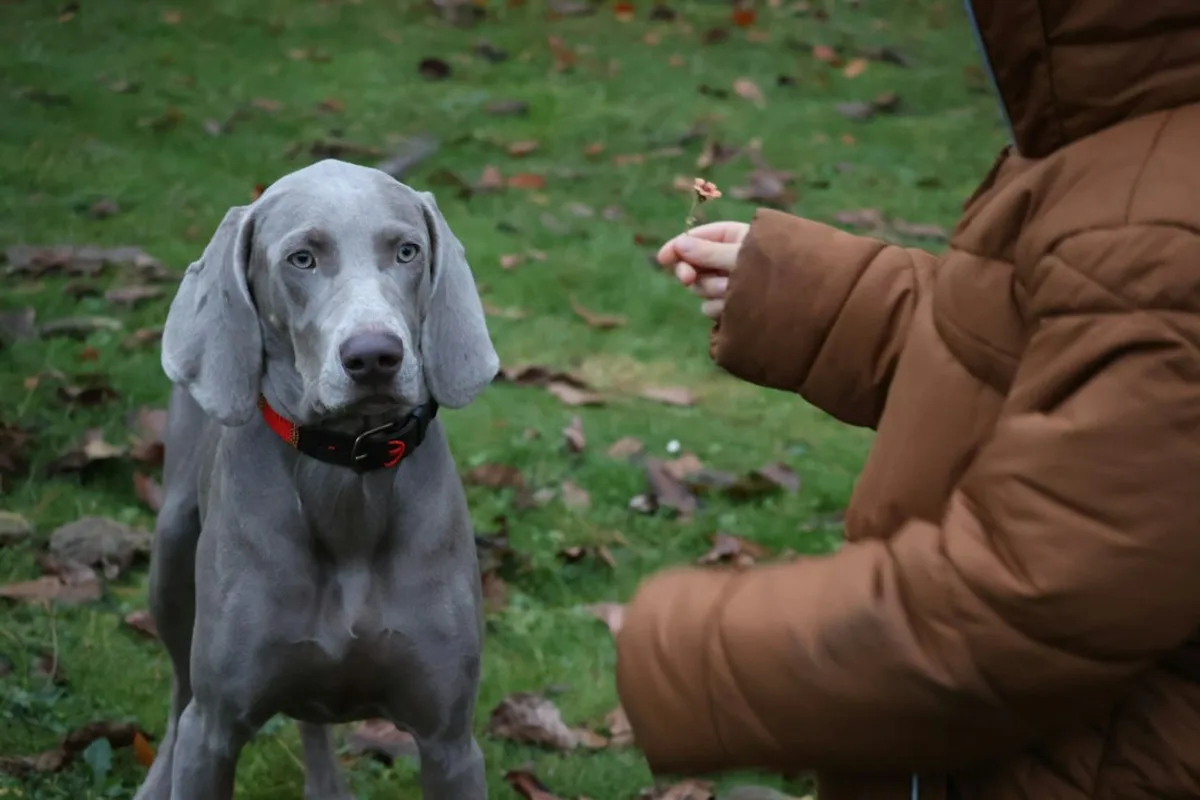
Save your dog’s favorite treat for harder lessons. The AKC advises pulling out the stinky treats your dog adores in more distracting locations, and keeping pieces pea-sized or smaller. An AKC trainer also advises never feeding a full meal right before training, because treats work better as motivators when your dog has some appetite. Cornell’s veterinary college says treats should make up only about 10% of a dog’s daily calories, so if training uses a lot of them, trim meals to match.
Say the cue once
Pick one word for each behavior and say it a single time. Repeating “sit, sit, sit” can teach your dog that the first one is optional. Make sure everyone in the household uses the same words and hand signals, otherwise your dog is learning three different languages.
How Long and How Often to Train
Sources frame timing a little differently, but they agree on the shape. MSPCA-Angell recommends keeping sessions under five minutes. The RSPCA recommends sessions that are brief and frequent, and suggests finishing on a command your dog already knows so each session ends on a win.
In practice, that means a few mini-sessions across the day, each one stopping while your dog is still keen. A dog with lots of energy will focus better after a walk or a game first. If your dog starts sniffing the floor, yawning or wandering off, the session has run too long, or the task has become too hard.
A simple one-week starter plan
This is a suggested routine, not a rule. Adjust the pace to your dog.
| Days | Focus | Where |
|---|---|---|
| 1 to 2 | Sit with a treat lure | Quiet room |
| 3 to 4 | Add the “sit” cue, then teach down | Quiet room |
| 5 | Come when called, two people, short distance | Indoors |
| 6 | Very short stay | Quiet room |
| 7 | Repeat everything with fewer treats | A different room or the yard |
Teach Sit, Down, Stay and Come, Step by Step
How to teach sit
MSPCA-Angell describes luring: guide your dog into position with a treat, then add the word once the behavior is reliable.
- Stand in a quiet room with a few small treats in your hand.
- Hold a treat at your dog’s nose, then slowly move it up and slightly back over their head. Their bottom should lower as their head follows.
- The moment their bottom touches the floor, say “yes” and give the treat. This short word is a marker: it tells your dog exactly which moment earned the reward. A clicker does the same job.
- Repeat several times. When your dog sits easily, say “sit” once, then lure.
- Fade the lure. Use the same hand motion with nothing in it, and reward after your dog sits.
How to teach down
Start from a sit. Lower a treat straight down to the floor between your dog’s paws, then slide it slowly away from them. When their elbows touch the ground, say “yes” and reward. Add the cue “down” once they lower themselves smoothly.
How to teach stay
Stay is really three skills: duration, distance and distraction. A certified trainer writing for PetMD advises adding only one of these at a time. When you raise one, make the others easy again.
- Ask for a sit. Say “stay” once and wait one second.
- Before your dog moves, say “yes” and give a treat. Then say your release word, such as “okay.”
- Add a second at a time. If your dog gets up, you went too fast. Go back to an easier step.
- When duration is solid, take one step away, then return to your dog and reward. Walking back to deliver the treat, rather than calling your dog to you, makes it easier for your dog to stay put.
- Only after distance is easy, add small distractions, such as a dropped toy or a family member walking past.
How to teach your dog to come when called
A reliable recall is a safety skill, so make it the most rewarding thing your dog does.
- Choose a recall word and use it only for this. Don’t use it when you’re annoyed.
- Start indoors at a short distance. MSPCA-Angell suggests a two-person game: one person calls and rewards, then the other, while the dog moves between you.
- Use an upbeat voice. Reward every single time, with your best treats.
- Move to a yard, then to quieter outdoor spaces, increasing distance gradually. A long training leash keeps this safe.
- Keep it positive. MSPCA-Angell advises never to call your dog for something unpleasant. If you need to clip nails or give medicine, go and get them instead.
The AKC also recommends making recall rewarding. If coming to you ends in a scolding, your dog may be slower to come next time.
How to teach loose-leash walking
Pulling works for dogs because it gets them where they want to go. To change that, reward the position you want.
- Start in a quiet area with treats ready. If pulling is a big problem, MSPCA-Angell notes that a head harness or no-pull harness can help.
- When your dog walks beside you with a slack leash, reward them. MSPCA-Angell suggests rewarding frequently at the start, about every two to four steps.
- Stop moving when the leash goes tight. Wait for it to loosen, then walk on.
- Gradually reward less often as your dog gets better at staying beside you.
Quick Reference: Basic Dog Commands at a Glance
| Command | First step | Common mistake |
|---|---|---|
| Sit | Lure the nose up and back until the bottom lowers | Repeating the word |
| Down | Lower a treat between the paws from a sit | Pushing the dog down |
| Stay | Wait one second, then reward before the dog moves | Adding duration, distance and distraction at once |
| Come | Two-person game indoors | Calling the dog for something unpleasant |
| Loose-leash walking | Reward beside you every few steps | Walking on when the leash is tight |
Dog Training Tips for Puppies, Adult Dogs and Older Dogs
The method stays the same at every age. What changes is the pace, the length of sessions and what your dog is physically comfortable doing.
| Age | What to focus on | What to adjust |
|---|---|---|
| Puppies | Socialization, name response, sit, come, handling | Very short sessions. MSPCA-Angell recommends exposing puppies to a variety of environments between weeks 4 and 14, paired with gentle playmates rather than chaotic settings. |
| Adult dogs | Basic cues, then reliability around distractions | They may have established habits, so go slowly and reward the alternative behavior you want. |
| Older dogs | Easy cues, mental games, comfort | Get a vet all-clear first, as the AKC advises. Choose behaviors that suit their joints, and if hearing or sight fades, switch between hand signals and spoken cues. |
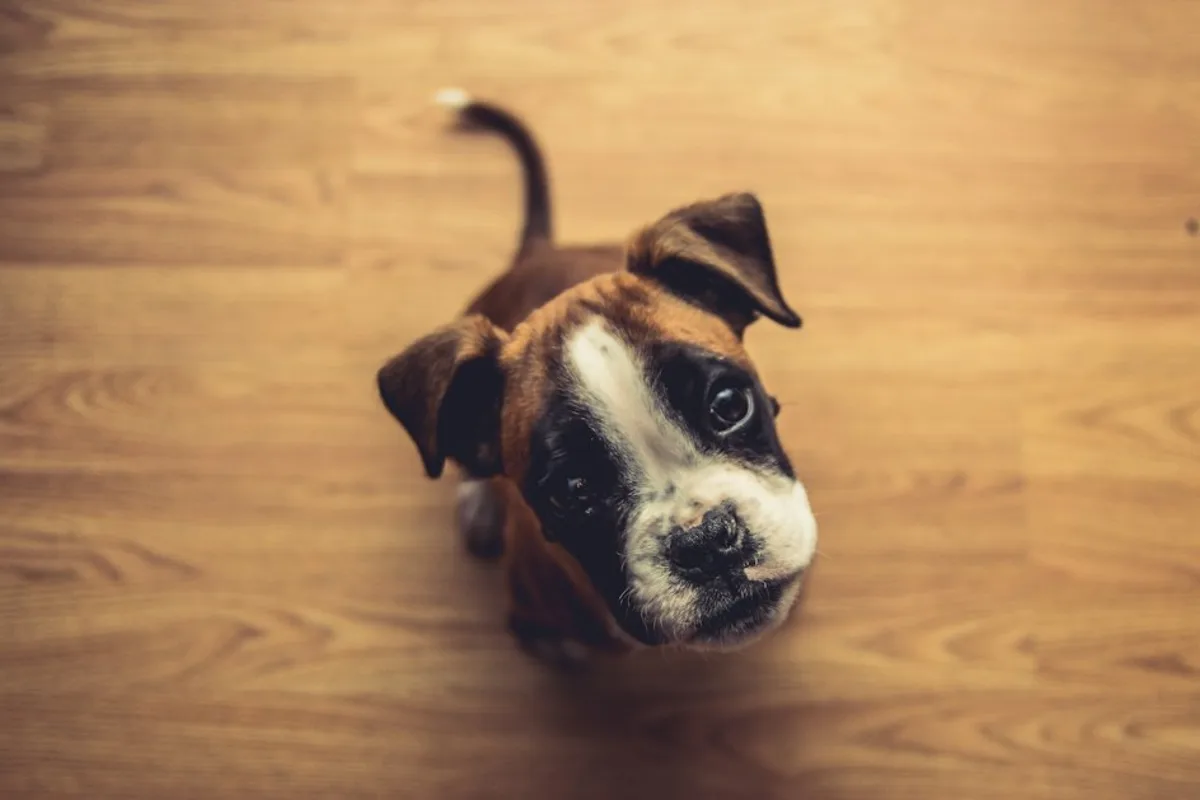
Puppies need extra patience. Their bodies and attention spans are both still developing, so keep lessons playful and end early. Adult and older dogs can learn with the same methods, though they may need more repetitions to replace habits they’ve had for years.
Fix Common Dog Training Problems
Many training problems come down to difficulty. When your dog struggles, the lesson is often too hard for the current setting. Go back to the last step they got right.
| Problem | Likely reason | What to try |
|---|---|---|
| Ignores the cue | Too many distractions, or the cue isn’t learned yet | Move somewhere quieter, as the RSPCA advises for early learning, and use a better treat. |
| Obeys indoors only | Hasn’t generalized the cue to new places | Practice in new places. Cornell’s veterinary college notes that dogs don’t generalize easily, so train in different parts of the house and yard, then move to more exciting places. Start with easy versions of each skill. |
| Loses focus quickly | Session too long, or dog too excited | Shorten the session. Exercise your dog first. |
| Takes the treat but doesn’t try again | Reward isn’t valuable enough | Try softer, smellier treats, a toy, or train before a meal. |
| Pulls on the leash | Pulling gets rewarded by moving forward | Stop when the leash is tight. Reward steps beside you. |
Dog Training Mistakes to Avoid
- Rewarding late. A delayed treat can reinforce the wrong behavior.
- Repeating the cue. Say it once, then wait.
- Using “no” with nothing to replace it. The AKC advises communicating clearly. Show your dog what to do instead and reward that.
- Calling your dog for something unpleasant. It damages recall.
- Using punishment, corrections or electronic collars. MSPCA-Angell advises avoiding them, AVSAB recommends against aversive methods, and the 2020 study above linked them to more stress.
- Training for too long. Stop while your dog still wants more.
- Raising difficulty too fast. If your dog keeps getting it wrong, make it easier.
When to Hire a Professional Dog Trainer
Consider professional help if your dog growls, snaps or bites, shows intense fear or anxiety, or if training has stalled even though you practice regularly. The RSPCA recommends classes for more advanced skills and a qualified behaviorist for specific behavior problems. If your dog seems sick, injured or in pain, or their behavior changes suddenly, call your vet first. The ASPCA says to contact a veterinarian right away for any physical distress, and it notes that many behavior changes can be signs of treatable medical disorders.
Ask any trainer what methods they use. Look for reward-based training, and be cautious if they rely on corrections, pain or fear, which AVSAB and MSPCA-Angell advise against. The ASPCA notes that education and experience vary greatly among pet-behavior professionals, and that they use many different titles, so ask about credentials as well as methods. It says problems such as aggression and separation anxiety need custom treatment plans, and for serious cases it recommends an expert with a master’s or doctoral degree plus practical experience, such as a certified applied animal behaviorist or a veterinary behaviorist. Veterinary behaviorists can also prescribe medication when it would help.
Dog Training Tips FAQ
How long does it take to train a dog?
It depends on the dog, the skill and how often you practice. The RSPCA notes that timelines vary from dog to dog. Many dogs pick up a simple cue like sit quickly, but reliability around distractions takes longer, and practice never fully stops.
What is the most effective way to train a dog?
Reward-based training, which AVSAB recommends for all dog training. Pay your dog right after the behavior you want, teach one new skill at a time in a quiet place, and make it harder in small steps.
Can older dogs learn new tricks?
Yes. The method is the same as for younger dogs, but you may need more repetition and extra care for joints, hearing and vision. See the age section above.
What should you not do when training a dog?
Don’t punish, repeat the cue, reward late or call your dog for something unpleasant. The mistakes list above explains each one and what to do instead.
What if my dog isn’t responding to training?
Go back to an easier step, move somewhere quieter and upgrade the reward. The troubleshooting table above covers the usual causes. If there is no progress after consistent practice, talk to a trainer.
Sources
- AVSAB, Position Statement on Humane Dog Training (2021)
- Vieira de Castro et al., “Does training method matter? Evidence for the negative impact of aversive-based methods on companion dog welfare,” PLOS ONE (2020)
- MSPCA-Angell, Pro Tips for Training Your Dog
- RSPCA, Dog training
- American Kennel Club, Essential Dog Training Tips for New Puppy and Dog Owners
- American Kennel Club, The Right Treats Make the Best Rewards
- American Kennel Club, Dog Training Classes: Tips for Keeping Your Canine Companion Engaged
- Cornell University College of Veterinary Medicine, Training “stay” vs. “wait”
- PetMD, How to Teach a Dog to Lie Down No Matter Where You Are
- Cornell University College of Veterinary Medicine, Obesity and weight loss in dogs
- ASPCA, Behavioral Help for Your Pet
- ASPCA, Behavior Problems in Older Dogs
- American Kennel Club, The Importance of Training Your Senior Dog